Showing posts with label Interaction Theory. Show all posts

Friday, May 10, 2013

Reflection

Reflect on how this course has affected your perspective as a designer. What has changed? What has stayed the same? In what ways are you more confident and what gaps do you still feel you have?


From the basic principles of interaction design to storytelling and  prototyping, I have learned a tremendous amount in this course.

The skill that I believe I have built on the most is the ability to find a problem and brainstorm potential solutions. I have also learned how to look forward and how a problem should be looked at an opportunity rather than a hurdle.

As a graphic designer, I was not required to learn about technological advancements as technology rarely affected the process used and type of work I would produce. In the limited situations that it did affect my work, the effect was minimal. However, interaction design requires a vast knowledge of technological trends and advancements as the industry is constantly changing and a failure to keep up to date can leave you behind. I believe I still need to read more to stay in up to date with technology trends and advancements.

Overall, I really enjoyed the the Interaction Theory class. Also, I am glad that I had the opportunity to be in your studio 0 class as it was the first time I dealt with interactive design and you may have just changed my career path.

Emotion in Design

What is the role of emotion in design? Is it ever okay to ignore the emotional layer and focus only on function? If yes, then when?


There is no question that emotions play a large role in any designer's work. I believe that the success of a design is measured by how well it connects emotionally with its audience. The emotion may be sadness, fear, joy, a combination of which or anything in between.

When dealing with interactive design, a design that is aesthetically engaging and is able to promote a positive mood will be much easier to convey the desired message. Moreover, such a design will give the end user a comfortable feeling promoting interaction between the interface and end user.

I think it is never okay to ignore the emotional layer even if ignoring was possible, but I believe that it is virtually impossible to ignore the emotional layer.

When we focus on the function level of a design and we consciously try to avoid the emotional layer of the design we are still unconsciously considering the emotional aspect of the design. This level may be very basic but it definitely is related to the emotional. when we design to create a " better user experience" or "simple user experience" or " keeping the user happy" we are still considering to keep the user emotionally happy and avoid raising negative feelings such as frustration, anger, confusion and annoyance in our users.

Saturday, April 20, 2013

Converging or Diverging


Do you think design disciplines are converging or diverging? Consider analogous industries, such as medicine, to inform your point of view.

I believe design disciplines are rapidly converging. Hardware products and software product are more intertwined today than ever before.


For example, 15 years ago the designers behind making a music player (whether it be a tape player or cd player) were primarily hardware product designer. Software designer had little to no input in the end product. However, today, a music player, such as an ipod or MP3 player, involves both a software designer and hardware designer. A user interface ( the product of a software design), which was completely absent in music player 15 years ago, is now in my opinion equally or more important than the overall hardware design. One of the driving factors behind Apple’s great success was its ability to combine the hardware and software design, in which the design of hardware depended on the design of the software and vis versa.
I believe design disciplines will continue to convert as more and more hardware products shy away from physical buttons and turn to virtual “buttons.”

In addition, I believe the constant wave of product integration can only lead to a spike in design conversions. Home products are becoming smarter and more integrated. For example, there are now multiple applications for you computer, phone or tablet that will allow you to control everything in your house from your thermostat, tv, lights to your oven. Many of these products will naturally obtain their own user interface which will, design wise, need to be consistent with other user interfaces including the controlling computer, phone or tablet software. This trend will likely expand to non-home products, such cars and vending machines( Which had already started), as well as industrial products. The result of which, in my opinion, can only products a conversion in design disciplines.

Friday, April 19, 2013

Why does everyone think they can do interaction design?


Why does everyone think they can do interaction design? Do other design disciplines face this challenge?


As discussed in class, there are many people that think they can do interaction design. I believe this is the product two primary issues - (1) the success of the design is looked at subjectively and (2) cost is rarely considered.

As the saying goes, “you can please some of the people some of the time, all of the people some of the time, some of the people all of the time, but you can never please all of the people all of the time.” When it comes to interaction design, you will always have people that are not pleased with the design. These non-pleased people will typically think they could have done the design better. However, they rarely think about the amount of research and trials that went into the design. Sometime, these people may be 100% correct and their design idea may be more intuitive. But, the majority of the time, these people simply basing their critique of the design solely on personal preference

In addition, people rarely look at the cost and availability of the technology  associate with their proposed interaction design. With high competition and expensive patents, some interaction designs are meant to be done on a budget and, as such, are not intuitive as the could be. Interactive designers often have to dumb down their ideas as the hardware component simply can not handle it. However, this is rarely taken into consideration by people without a design background.

I believe the same challenges exist within graphic design and branding. People typically will look at graphic design and/or branding from a subjective mindset and not take into consideration that the design was meant to reach as broad of an audience as possible and the design will undoubtedly not reach, impress or be relatable to everyone. Just like interactive designers, graphic designers are routinely limited by the amount of time and cost that can be incurred on a project. Moreover, with software like Indesign, photoshop and illustrator becoming more and more user friendly and automated, many people start to believe they can do as good of a job as a graphic designer. They can simply take existing designs, copy them, make minor tweaks and believe that is all that goes into being a graphic designer. Besides potentially breaking trademark laws, these people rarely are able to do the job correctly as they are unable to look past their subjective views.

Friday, March 22, 2013

Past Present & Future


What’s your pet app idea? Based on the tools and processes that Aaron shared, discuss the minimum essential features, as well as elements that are not essential that you would want to add after launch.


what I would like to explore more, is tracking the amount of time each person spends daily thinking about the events that already took place in the past, planning the future and  focusing on what they are doing at that moment.

I am interested to learn how much of our time we spend on thinking about other things other than what we are doing at that time. I believe the data collected can be helpful with many psychological issues. Moreover, it may also be helpful in tracking our focus and productivity.

I conceptualized this project in my Design History class and would have loved to learn more about it had time permitted.

In order to track this data we need two essential things. One, a headset that can tracks and distinguish the different waves sent by the human brain and, second, an app to monitor and document the data received.

While researching tracking devices, I came across a devices called NeuroSky. However, I am unsure if NeuroSky is capable of collecting the data needed. Nevertheless, lets assume NeuroSky or some other device exists that can track and distinguish waves associated with thoughts of the past, present or future.
I believe the application is the important part of this idea as it will take and transform the data into something that is understandable. The application can be in the form of a mobile app or a website, in both cases it will demonstrate the same thing.

I believe that the essential features to launch the app are as follows:

. A headset or other device that tracks and distinguishes brain wave;
. The headset or device will need to have bluetooth capability so it may transfer the data to the application;
. An easy translation of the data for the user to track the information; and
. A graph that shows the change during over a course of time.

I believe the above is enough to launch the application. However, in order to maximize the application’s potential, I believe it will need to include the following:
. The ability to set goals (for example the use is able to set goals in order to focus more on their daily activities)
. The application could have the option to make recommendations based on their activities and how to achieve their set goals;
. In cases involving psychological patients, doctors can have access to their patient’s data to track their activities and progress;
. Social networks and comparison abilities: this can give the user the opportunity to compare their results with others. For example, the user can compare his or her results with someone they admire.

There is no question that social interactions and networking is today one of the most important aspects of ever design. Nevertheless, I believe, based on the MVP list, that the social interaction and networking portion of the application is comes at the end of the list.


Prototype


Discuss one of the best prototypes you have encountered, either yours or someone else’s. Why was it great? What did you or its designer learn from it? What would the designer have missed if the prototype had never been built?


Initially when I decided to blog about this topic, I wanted to write about prototypes I had created while working as a graphic designer and their importance in avoiding future disappointments.

However, last week, I went on a tour  to The Long Now Foundation at Fort Mason and came across a fascinating prototype for their “10,000 Year Clock” project. This clock is meant to be an symbolic work for long term thinking. It is designed to tick for 10,000 years and is scaled to be as a monumental piece built inside a mountain in West Texas.

The scale and the detail of these prototypes is significant as it is made up of thousands of parts. in order for them to test and learn every step they had to divided the project into different parts and create a prototype for each part. Given the massive scale of the project, some prototypes needed to be built at a smaller scale just for the designer to test if the technical aspect of the project would works. Other prototypes were just designed to study human interaction with the project.


In addition, during the tour, I learned about the different levels of the prototype. As can be seen from the posted pictures, some prototypes are very small and made with cheap material, such as wood. For a project this scale, I don't think the designers will ever be able to build the final project without going through several prototypes.

Overall I was very impressed with the work and I am looking forward to see the final project especially so that I may compare the prototypes to the final project.

Saturday, March 2, 2013

Ethics of designing for behavior change


Reflect on the ethics of designing for behavior change. When is it okay and not okay to “trick” people into doing things that are good for them? Does everything we create, in one sense or another, change an end‐user’s behavior? Use concrete examples to illustrate your points.


Regardless of our intentions all design will create behavior change in a way or another. Now if tricking someone to changing his or her behavior is ethical is the question.  I think the morality of such a change depends on the intentions behind the design. For example in advertising, even if the client is going to benefit from that product or service, it is for the sake of personal interest. When burger king designs an ad showing a grilled patty, they want nothing more but to gain more profit. Burger King may be a healthier choice than McDonalds, but their intention is not people’s health, all they care about it pure profit.

I believe tricking people to change their behavior is justified only if it is done to improve their lives. This improvement could be medical, in education or even simply helping someone achieve their goals. For example Protius, is designed to change behavior for the client sake and improve their lives. My father is diabetic, he is very well motivated and has the ability to take care of his health but a signal would be very helpful.  A little reminder to encourage him to stick to a schedule will significantly help his health.

I believe that if the intention behind a design is to improve ones life, then it is justified to trick people into helping them. But if your main reason for the design is for the producer to benefit from the behavioral change, then it is not ethical.

Wednesday, February 27, 2013

Disappeared Technology


Have you experienced a technology that has truly disappeared? Describe the experience and why the technology disappeared. What replaced the technology in the forefront?

One of the many technologies that has truly disappeared is connecting to the virtual world. I remember my brother discussing with my dad about a piece of hardware that he wanted to buy for his computer, later I realize that piece of hardware was a modem.

connecting to the internet it was a long and somewhat irritating process. I was fourteen years old when my brother bought the first dial up network card. On the card there was a username and password that we had to scratch off and a network number. First, we had to connect the telephone line to the desktop computer and only one computer could connect to one line at a time. Next, we had to open the network dial up connection on the computer, feed the number, username and password to it and dial the number. After a few rings, you would hear a noise that sounded like aliens communicating to the world.  And that wonderful noise meant that I was finally about to connect to the Internet.  The most frustrating part was when the network was busy and you had to constantly redial until you could finally connect! In order to reduce online traffic the government would have discount rates if you tried to connect between the hours of 11 pm to 5 am.

However, today this technology has become so transparent. We expect it to be available everywhere at all times. There is mainly a one time setup for the wireless modem in most cases. Then we can connect as many devices as we want to the same network. We can simply walk into a coffee shop and connect our personal computers to the wireless internet. Moreover, we have the internet on us all the time through our smart phones. The Internet is no longer a mark of luxury as it was when I started using it; it is becoming a necessity. It is impossible to imagine our lives without it.

Friday, February 8, 2013

Interaction Changes

-->
 
-->

Discuss a Product that has changed significantly over the years that you’ve used it. How have the interactions changed? Why have they changed? Is the product better or worse now?


The portable music player has changed significantly during the past few years. 


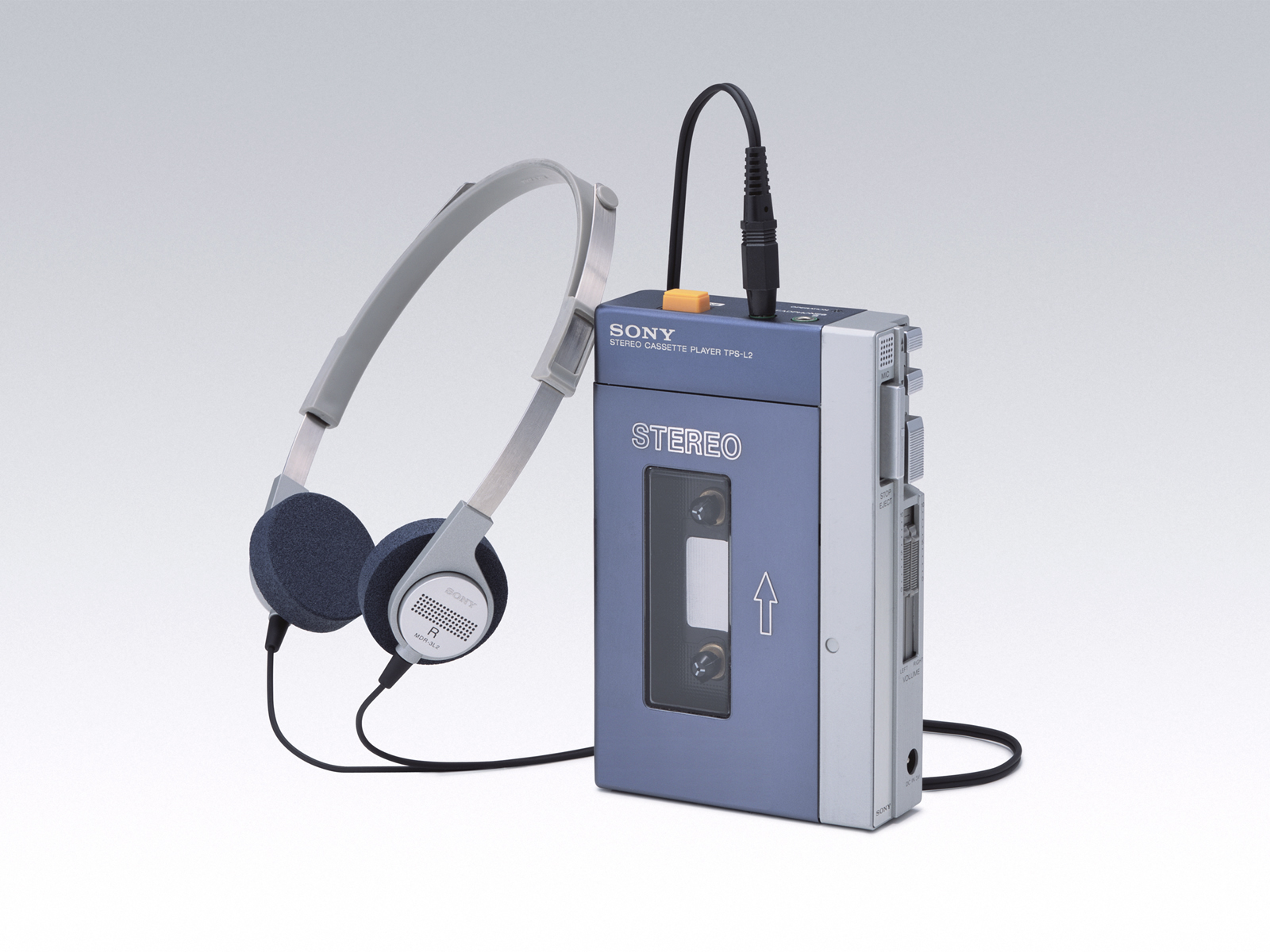
 I enjoyed climbing up the mountains in Iran listening to music on my Walkman. When my father bought me The Walkman I was very excited to show it off. I’d carry my one mixtape around, listening to it for several weeks until I knew every song by heart. This was because carrying multiple tapes was inconvenient. Often I would fall in love with one or two songs. Though it was annoying navigating through the tape to find those songs, it was definitely worth it.
A few years later, I started borrowing my brother’s Discman. With this cool looking device’s new interface, I could navigate through songs much faster. I was still limited to seeing the name of one song at a time, but at least I didn’t have to guess where the next song starts.

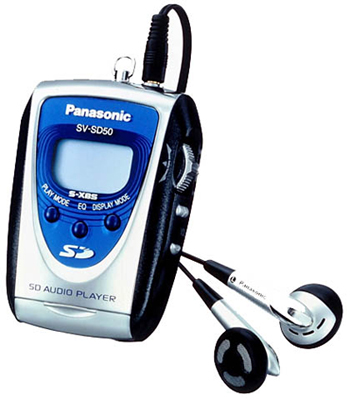
In the summer of 2002, during our family vacation in Singapore I came across, Panasonic’s SD Card Player. I bought it because it was much smaller and lighter to carry around than the Walkman and the Discman. It had the ease of the Discman’s interface, but also I carried five times the amount of music. I realized I was listening to music more than ever.
But listening to music completely changed when I bought my iPhone. Carrying music was no longer a decision I had to make because I had my phone with me all the time. Collecting music is much cheaper. Instead of buying an artist’s entire album I can now only buy the songs that I like. Easy and cheap access gives me the opportunity to learn about more artists. Moreover, I have access at all times to music through providers like Pandora. 

I believe that with these changes, music companies have taken advantage of the available technology to improve the user’s experience, making the enjoyment of music easier and more practical. The size of these electronics has considerably diminished while their capacities have increased, resulting in an improved listening experience.

However, I realized that because of the unlimited access to music, ignoring my surrounding is easier. Therefor I limit myself to listening during certain hours of the day. Despite the improvement in this new technology, isolation seems to be a side effect.